Bringing together health and safety experts in parliament to tackle silicosis
01 July 2026
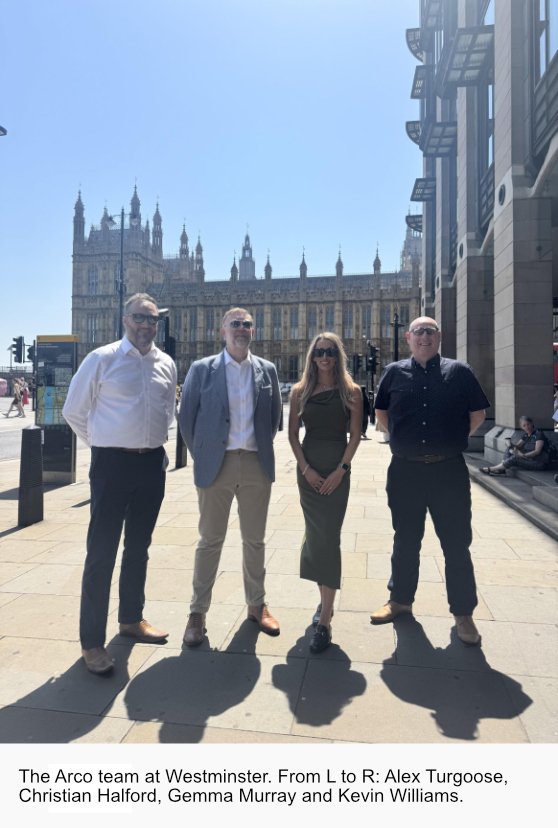
Arco has partnered with the Respiratory Health All-Party Parliamentary Group (APPG) to bring together policymakers, expert clinicians and respiratory health and safety specialists for a roundtable discussion on silicosis, an urgent and preventable workplace health crisis.
Silicosis is a serious and irreversible lung disease caused by inhaling respirable crystalline silica (RCS) dust. Over time, the dust can cause inflammation and permanent scarring in the lungs. While late-stage silicosis is incurable, the disease is preventable through effective controls, including wet-cutting methods and the correct selection, use and maintenance of quality respiratory protective equipment (RPE). Learn more about silicosis and why awareness matters in our recent article.
Health and safety experts join forces
Ian Lavery MP, chair of the APPG for Occupational Health, opened the roundtable and thanked Arco for partnering with the Respiratory Health APPG. The discussion was moderated by Christian Halford, Arco's Technical Quality Director, who shared insight on the role respiratory equipment can play in helping to keep workers safe. Alex Turgoose, Arco's Product Manager for RPE, and Kevin Williams, Arco's Respiratory Health Lead, also contributed their specialist expertise throughout the discussion.
Dr Johanna Feary, a respiratory doctor specialising in occupational diseases at Royal Brompton Hospital, shared new data on the prevalence of silicosis, alongside her personal experience of treating people affected by the disease. The UK currently has 52 confirmed cases of silicosis, with many affected workers aged between their 20s and 40s, and deaths already reported in people as young as 28.
Highlighting challenges
A key challenge highlighted by Dr Feary is that early-stage silicosis is asymptomatic, meaning workers who wait for symptoms to appear may risk leaving it too late to access treatment. She also highlighted the risk of misdiagnosis during the early stages, noting that GPs need more support and training to recognise occupational diseases earlier.
Dr Feary called for a national screening programme for stonecutters in the UK, better education for healthcare professionals to raise awareness of the symptoms and risks of silicosis, and improved coordination across the NHS to help people at risk of silicosis access specialist care sooner.
Professor Kevin Bampton, CEO of the British Occupational Hygiene Society, also highlighted the need for better training for doctors in occupational diseases and the current lack of health surveillance across the UK. He pointed to a disconnect between how the NHS treats diseases such as cancer and how it responds to occupational diseases such as silicosis, which he said must be addressed.
Key focus areas
Several roundtable members, including Ian Lavery MP, expressed support for recent Health and Safety Executive (HSE) guidance for stonecutters, which banned dry-cutting of stone and mandated the use of water suppression. Mike Calcutt, representing the HSE, said the regulator is consulting with industry on reintroducing silicosis to RIDDOR, a move strongly supported by members of the roundtable.
Participants agreed that the key focus areas should be making silicosis a notifiable disease through RIDDOR, strengthening occupational health integration in the NHS so people at risk can access specialist care, and improving training, education and early detection.
Hugh McKinney, Policy Advisor to the APPG for Respiratory Health, closed the meeting by confirming he would write to attendees to gather their views on the key issues and share a report outlining what needs to happen next.
Roundtable attendees included Liz Twist MP, Lord John Hendy, Baroness Rita Donaghy, Dr Johanna Feary, Professor Kevin Bampton, Hugh McKinney of the Respiratory Health APPG, Mike Calcutt of the HSE, Alan Murray of the British Safety Industry Federation, Alex Turgoose of Arco, Kevin Williams of Arco, Gemma Murray of Arco, Matt Powell-Howard of NEBOSH, Daniel Zeff of the Federation of Master Builders, Emily Agyeman of the National Federation of Builders, Joe Duggan of the i newspaper and Huna Haq of the TUC.
Expert advice on respiratory protection
For further information and expert advice, read our introduction to respiratory protection, learn more about the risks of silica dust and see our guide to managing hazardous airborne substances.